

BENTLY NEVADA
📢 100% genuine, extensive in-stock inventory, fast shipping!
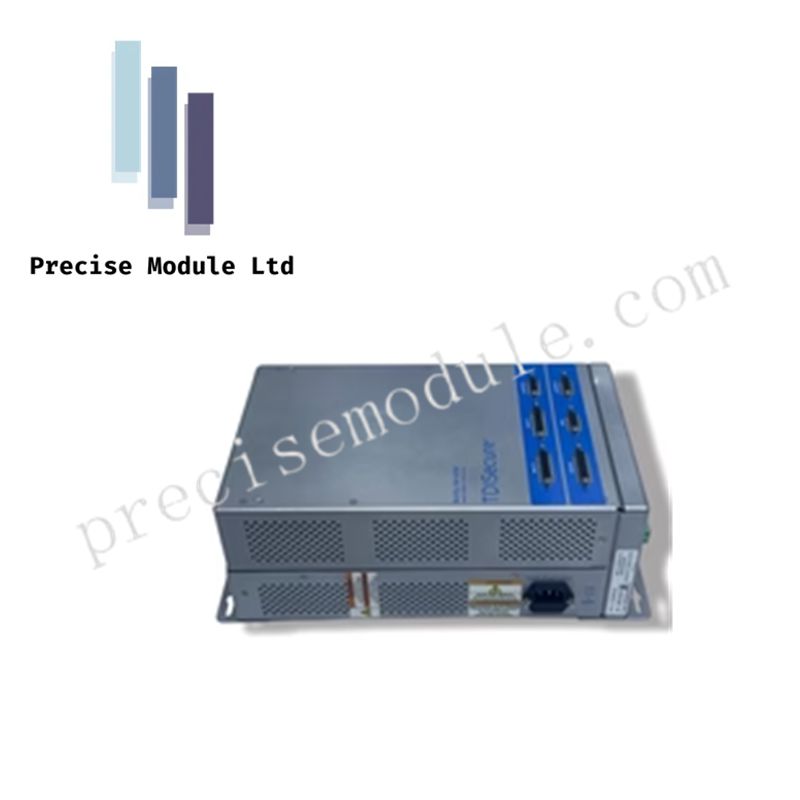
Bently Nevada 2155/40-02 | Acceleration Interface Module | 2100 Series Vibration Monitoring
Bently Nevada 2155/40-02 | Acceleration Interface Module | 2100 Series Vibration Monitoring
Manufacturer: BENTLY NEVADA
-
Product No.: 2155/40-02
Condition:in Stock
Product Type: 2155/40-02
-
Product Origin: USA
Payment:T/T, Western Union
-
Weight: 1000g
Shipping port: Shanghai/Yiwu/Shenzhen
Warranty: 12 months
Share
Product Description:
The Bently Nevada 2155/40-02 is an Acceleration Interface Module designed for integration within the 2100 Series Monitoring System. This analog signal conditioning unit provides precise vibration monitoring for high-frequency machinery, particularly useful for critical components such as gas turbines and gearboxes. The module interfaces with piezoelectric accelerometers to convert their high-impedance charge or voltage signals into a standardized, low-impedance voltage output (typically 100 mV/g). This allows for accurate monitoring and alarm detection for machinery health diagnostics.
The "-02" suffix indicates a specific configuration, typically optimized for high-frequency monitoring where casing vibration is a critical indicator of machinery health. This module is part of the legacy 2100 Series but remains a vital tool for continuous monitoring and predictive maintenance in industrial applications.
Key Features and Benefits:
-
Signal Conditioning: Converts low-level, high-impedance signals from piezoelectric accelerometers into robust, low-impedance voltage outputs suitable for long-distance transmission without signal degradation.
-
Integration with Vibration Monitoring Systems: Ideal for interfacing with systems like the Bently Nevada ADRE for in-depth machinery diagnostics and vibration analysis.
-
Buffered Output: The 2155/40-02 includes a Buffered Output BNC connector, allowing for portable vibration analyzers (e.g., Bently Nevada Scout) to connect for direct waveform and FFT spectrum analysis without interrupting the system.
-
Standardized Sensitivity: Outputs a 100 mV/g signal, making it compatible with a broad range of vibration monitoring and alarm systems.
-
Frequency Range: Provides reliable signal conditioning within a frequency range of 10 Hz to 10 kHz, which is critical for monitoring high-frequency machinery vibration.
Technical Specifications:
| Feature | Specification Details |
|---|---|
| Model Number | 2155/40-02 (Legacy 2100 Series) |
| Module Type | Acceleration Interface Module |
| Input Signal | Piezoelectric Accelerometer (Charge or Voltage) |
| Output Sensitivity | 100 mV/g (Standard) |
| Frequency Range | 10 Hz to 10 kHz (±3 dB typical) |
| Power Requirement | Powered by 2100 Series Rack |
| Output Type | Buffered Analog Output |
| Operating Temperature | -30°C to +65°C (-22°F to +150°F) |
| Mounting | 2100 Series System Rack Slot |
Key Functions and Capabilities:
1. Signal Conversion and Conditioning:
-
The 2155/40-02 transforms raw, low-level signals from piezoelectric accelerometers into a high-level, low-impedance voltage signal, suitable for further processing by vibration monitoring systems and ensuring accurate data transmission.
2. Integration Capability:
-
The module can be configured to output Acceleration (g’s) or Velocity (in/s or mm/s), providing flexibility for different types of machinery fault detection. This is achieved through mathematical integration of the acceleration signal.
3. Buffered Output:
-
With a Buffered Output BNC connector, the module allows maintenance personnel to directly connect vibration analyzers, such as the Bently Nevada Scout, without disrupting ongoing monitoring activities. This feature simplifies diagnostics and helps maintain system uptime.
Legacy Status and Replacement:
The 2100 Series has been largely superseded by newer monitoring systems, such as the 3500/42M or 3500/44M models. However, the 2155/40-02 module remains a valuable part of legacy systems for ongoing maintenance and monitoring.
Critical Matching: When replacing the 2155/40-02, ensure the connected accelerometer has the correct charge sensitivity (e.g., 10 pC/g or 50 pC/g) to match the module's internal gain settings for optimal performance.
Troubleshooting Tip: If experiencing "Noise" or "No Signal" issues, inspect the specialized low-noise coaxial cable between the accelerometer and interface module, especially in high-heat environments, as these cables can degrade over time.
Application Scenarios:
The 2155/40-02 is used for high-frequency vibration monitoring in industrial settings, particularly in critical machinery such as gas turbines, compressors, and gearboxes. It is ideal for use in industries where vibration is a key indicator of mechanical health, and real-time diagnostics and predictive maintenance are essential for preventing catastrophic failures.
Hot Tags :
- Choosing a selection results in a full page refresh.
- Opens in a new window.