


Bently Nevada
📢 100% genuine, extensive in-stock inventory, fast shipping!
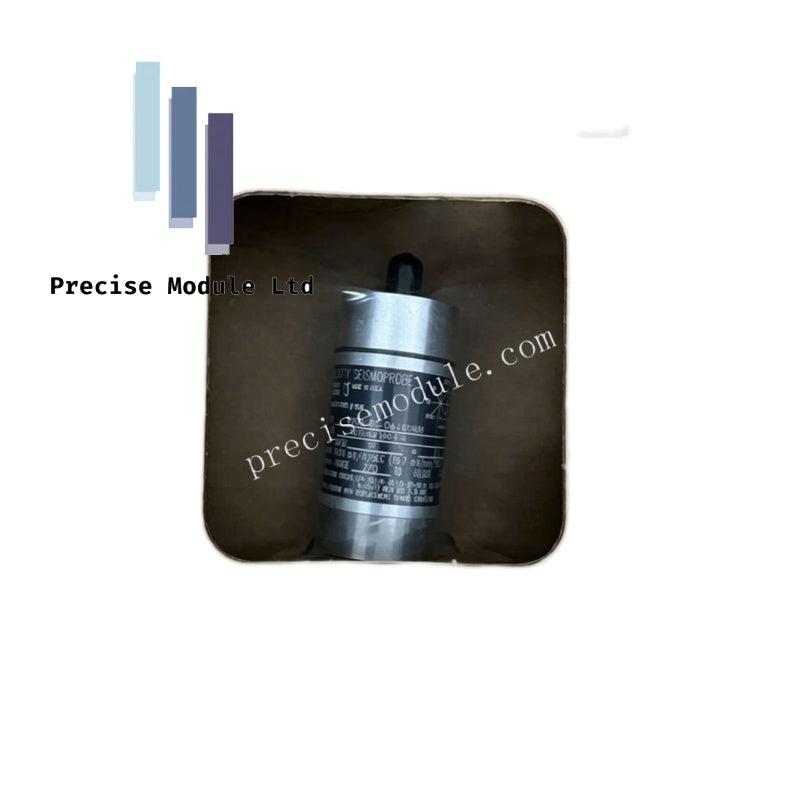
Bently Nevada 9200-03-06-10-00 Seismoprobe Velocity Transducer Systems
Bently Nevada 9200-03-06-10-00 Seismoprobe Velocity Transducer Systems
Manufacturer: Bently Nevada
Condition:in Stock
Product Type: Seismoprobe Velocity Transducer Systems
-
Product Origin: USA
Payment:T/T, Western Union
-
Weight: 350g
Shipping port: Shanghai/Yiwu/Shenzhen
Warranty: 12 months
Share
Bently Nevada 9200-03-06-10-00 Seismoprobe Velocity Transducer Systems
The Bently Nevada 9200-03-06-10-00, also cataloged as the 9200 Velocity Transducer, operates as a dedicated hardware component for absolute casing vibration measurement within machinery protection systems. The instrument utilizes moving-coil technology to output a continuous voltage signal directly proportional to the structural vibration velocity of bearing housings or machine casings without requiring external power loops.
Hardware Specifications
| Parameter | Specification |
|---|---|
| Model | 9200-03-06-10-00 |
| Brand | Bently Nevada |
| Origin | USA |
| Weight | 0.35 kg (typical for sensor body) |
| Dimensions | Standard cylindrical housing with integrated connector |
| Operating Temp | -40 deg C to +121 deg C |
| Power Consumption | 0 mW (Self-generating moving-coil mechanism) |
| Measurement Type | Absolute casing, bearing housing, or structural vibration |
| Signal Output | Two-wire voltage output proportional to velocity |
| Transducer Type | Moving-coil electromechanical seismic transducer |
Machinery Monitoring & Rotor Dynamics Integration
The moving-coil architectural design of the 9200-03-06-10-00 provides an electromechanical advantage when analyzing high-energy structural impacts or impulsive excitations. Unlike solid-state piezo-velocity variants that integrate an internal accelerometer signal and risk electronic saturation from high-frequency structural noise, this self-generating transducer directly outputs raw physical velocity. To maintain signal integrity across long-distance cable runs and prevent cross-talk suppression failures within multi-channel Turbomachinery Instrumentation (TSI) racks (such as the Bently Nevada 3500/42M), the two-wire system relies on tightly twisted, shielded pairs. Proper grounding architecture ensures that external electromagnetic fields do not corrupt low-voltage velocity measurements, maintaining phase accuracy for fundamental rotor dynamics tracking and casing vibration limits.
Frequently Asked Questions
Q: Does the 9200-03-06-10-00 require external power from the monitor rack?
A: No. The moving-coil technology within the transducer is completely self-generating. It converts physical mechanical vibration velocity directly into an electrical voltage output, making it highly reliable for continuous monitoring and portable diagnostic equipment.
Q: How does this transducer handle high-frequency mechanical shock compared to solid-state sensors?
A: The moving-coil assembly acts as a physical mechanical filter, making it inherently less sensitive to high-frequency impulsive excitation or mechanical impact than solid-state alternatives, preventing internal integration circuit clipping.
Field Installation Guidelines
- Mounting Orientation: Ensure the transducer is oriented correctly according to its specific calibration axis (vertical, horizontal, or inclined) as internal moving-coil suspensions are gravity-sensitive.
- Surface Preparation: The mounting surface must be clean, flat, and perpendicular to the axis of vibration. Thread engagement must be verified to prevent structural resonance at the mounting interface.
- Cable Shielding and Grounding: The interconnecting cable shield must be grounded at one end only, typically at the monitor rack or terminal box. Do not ground the shield at the transducer housing to avoid ground loop currents.
- Conduit Separation: Route the transducer wiring through dedicated, grounded metal conduit separated from high-voltage AC power lines or variable frequency drive (VFD) output cables to minimize electromagnetic interference.
Hot Tags :


- Choosing a selection results in a full page refresh.
- Opens in a new window.