


Bently Nevada
📢 100% genuine, extensive in-stock inventory, fast shipping!
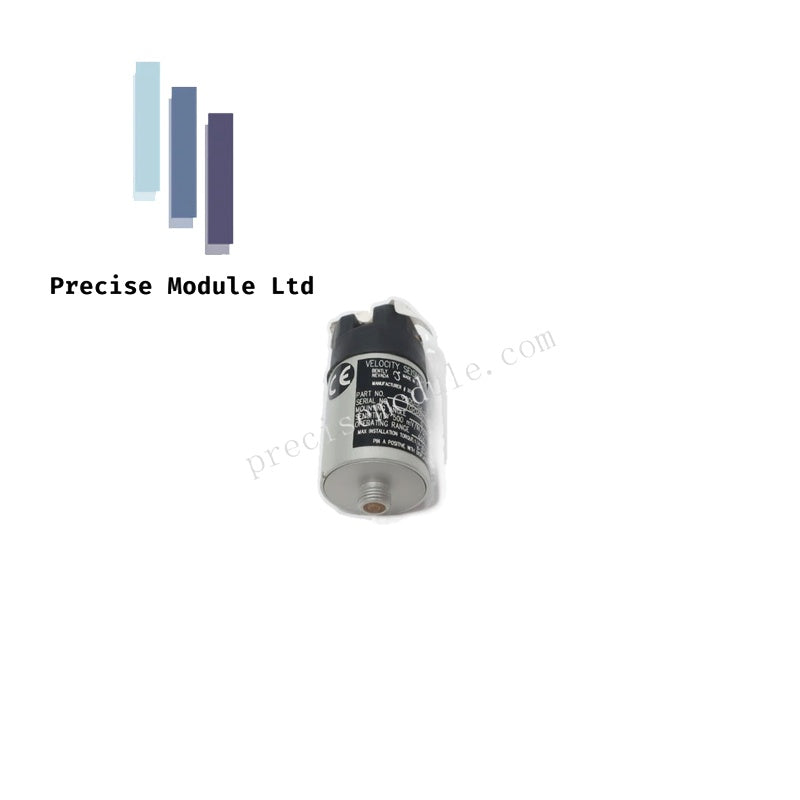
Bently Nevada 9200-06-05-05-00 Seismoprobe Velocity Transducer
Bently Nevada 9200-06-05-05-00 Seismoprobe Velocity Transducer
Manufacturer: Bently Nevada
Condition:in Stock
Product Type: Seismoprobe Velocity Transducer
-
Product Origin: USA
Payment:T/T, Western Union
-
Weight: 300g
Shipping port: Shanghai/Yiwu/Shenzhen
Warranty: 12 months
Share
Bently Nevada 9200-06-05-05-00 Seismoprobe Velocity Transducer
The Bently Nevada 9200-06-05-05-00, also cataloged as the 9200 Two-Wire Transducer, operates as a dedicated hardware component for absolute bearing housing, casing, or structural vibration measurement within Seismoprobe Velocity Transducer Systems.
Hardware Specifications
| Parameter | Specification |
|---|---|
| Model | 9200-06-05-05-00 |
| Brand | Bently Nevada |
| Origin | USA |
| Weight | 0.3 kg |
| Dimensions | 4 x 4 x 9.2 cm (Estimated shipping size) |
| Operating Temp | Standard industrial casing environment range |
| Power Consumption | 0 W (Self-generating moving-coil technology) |
| Product Type | Two-Wire Transducer |
| Technology | Moving-coil self-generating |
| Output Signal | Voltage proportional to vibration velocity |
Eddy-Current Probe Scaling and Rotor Dynamics
The velocity transducer implements moving-coil technology to output an analog voltage directly proportional to the physical vibration velocity of the structural casing. Unlike proximity setups that rely on eddy-current probe scaling and continuous gap voltage validation targets near -10 VDC, this self-generating sensor requires zero external excitation power. The mechanical internal suspension dampens high-frequency cross-talk suppression deviations, providing resistance to impact or impulsive excitation during severe rotor dynamics events. The raw velocity waveform is transmitted across two wires directly into internal rack monitor cards for integration into peak-to-peak displacement metrics.
Frequently Asked Questions
Q: Does the 9200-06-05-05-00 transducer require an external Proximitor power supply to operate?
A: No. The moving-coil design utilizes self-generating electro-dynamic technology, meaning it requires no external power source and is suitable for portable measurement applications.
Q: How does this moving-coil hardware compare to solid-state velocity sensors regarding mechanical shock?
A: Moving-coil transducers are mechanically less sensitive to structural impacts or impulsive excitation than solid-state alternatives, which function as accelerometers with embedded integration electronics.
Field Installation Guidelines
- Axis Alignment Layouts: Mount the transducer housing strictly along the engineered measurement axis (horizontal, vertical, or axial) to ensure internal moving-coil travel matches the structural vibration vector.
- Threaded Engagement Limits: Ensure the casing surface is machined flat and perpendicular to the mounting hole, using a standard torque wrench to verify tight mechanical coupling without stripping the threads.
- Two-Wire Cable Shielding: Terminate the outer shielding braid of the two-wire cable at the instrument rack ground busbar only, leaving the transducer end floating to isolate the loop from ground differential currents.
- Conduit Routing Isolation: Route the field transducer cable through dedicated flexible metal conduit separated from high-voltage motor power leads to mitigate electromagnetic noise induction.
Hot Tags :


- Choosing a selection results in a full page refresh.
- Opens in a new window.